A viral letter about AI risk, and what I can actually check
Details
- Published
- Language
- English
- Reading
- 5 min
A viral letter calls humanity's destruction or disempowerment by 2030 a coin toss. A forecast, not a measurement. What I check when I build agents.
It is Thanksgiving Day in the US and a long post is climbing your feed. It starts like a letter to the family, and a few paragraphs later it is talking about everyone's next few years.
You read it twice. Then you notice you cannot tell which parts someone measured and which parts someone fears.
That gap is what this note is about.

What does the letter say?
The post is an X article called A Warning About AI to My Loved Ones. Nikola Jurkovic, whose X bio reads AI safety researcher, published it on Thursday, November 26, 2026, at 13:54 ART.
By 21:40 ART the same day it showed 1,289 likes, 205 reposts, 141 quotes, 261 replies, 1,531 bookmarks and close to 500,000 impressions.
He writes to his family and friends that he is not sure we will all be here next Thanksgiving. He says AI incidents got more severe this year, that AIs hacked multiple companies, and that the damage was mostly financial. He expects worse next year, possibly including deaths.
Then come the estimates. Without strict global regulation, he expects AI to start improving itself and to pass the smartest humans, possibly as early as 2027. He puts the chance that we cannot celebrate the holidays at the end of 2027 at around 5 to 20 percent, and he expects most current jobs to disappear within 10 years.
I think that the probability that humanity is destroyed or disempowered before the end of 2030 is similar to that of a coin toss.
Nikola Jurkovic
His asks are plain. Tell people, tell your politicians you want global regulation aimed at slowing the AI race, learn about the risks, and, if you work in the field, put your career into safety. On the personal side he suggests keeping about two weeks of food and water and some cash, and he says he is dedicating his own career to AI safety.
Is it a fact or a forecast?
Almost all of it is a forecast. The letter is full of I think and I expect, and the author says so himself.
The one claim that sounds like a fact is that AIs hacked multiple companies this year. The text names no incident, and I did not verify one, so I treat it as his claim.
The numbers are estimates. A coin toss for 2030 and 5 to 20 percent for 2027 are what a person believes after thinking about it for years, by his own account, not what an instrument read.

I cannot confirm those numbers and I cannot refute them. Neither can 500,000 impressions.
That does not make him wrong. It means a like and a mock are both the wrong response to a forecast, and the right one is to ask what would change it.
What did people say back?
I read about twenty replies and twenty quotes, out of 261 replies and 141 quotes. Most were short jokes or insults, and I will not repeat them.
A few made an argument. One said the story helps people who want governments to control AI, and another asked what two weeks of food and water would do against a threat that big.
The second question has a partial answer in the letter. He ties the stockpile to a possible disruption next year that he describes as bigger than COVID, which is a different claim from the extinction scenario.
What can I check from my desk?
I am a frontend engineer who builds agents and uses Claude every day. I cannot tell you whether 2030 is a coin toss, so I look at the part of the picture I actually touch.
In my setup, no agent can approve a merge or act under my name without my direct approval. I wrote about why in Your agents work for their company, not for you. The rule is not a reaction to this letter: it is the one I already run.
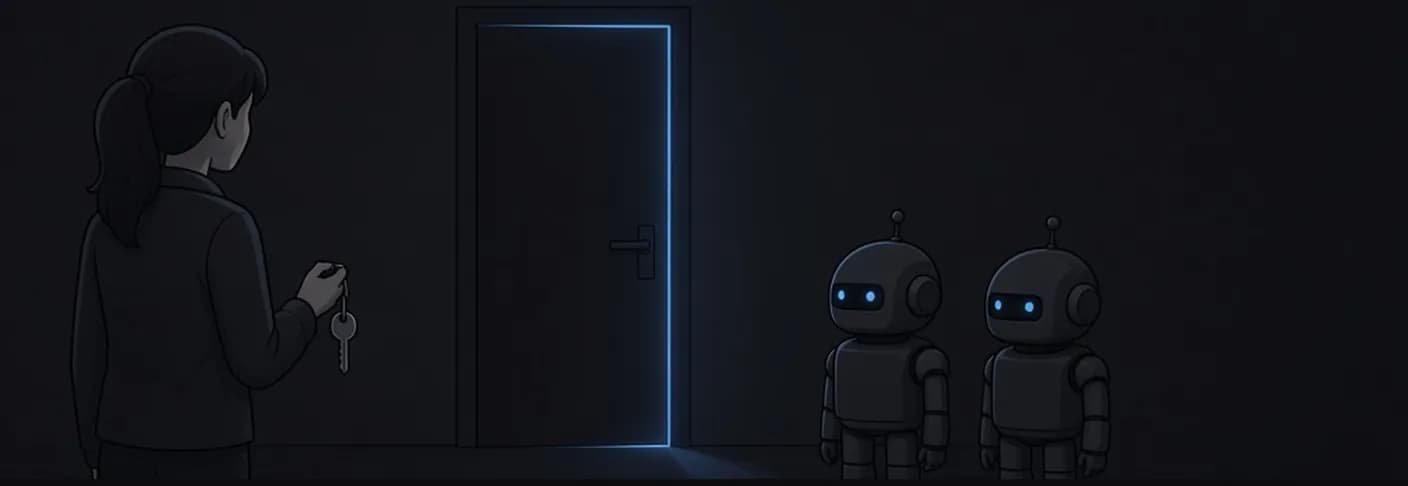
It is a small thing, and the letter is about a big one. But it is where I can turn a worry into a setting: what can this tool do without asking me?
If the incidents of this year were mostly financial, as the letter says, the habits that matter most are boring ones: least permissions, a draft before a write, and a person who can say no. Midas works that way with money: the app shows what is about to be recorded and nothing is written until the person approves.
A gate only works if the person standing at it still understands what they are approving. That is the point of my note on reviewing the diff.
What am I not saying?
I am not saying he is right, and I am not saying he is wrong. I have no research behind a probability, so I will not offer one.
He has been thinking about this for years, by his own account, and I have not. A forecast from someone in that position deserves a careful read, not a shrug and not a panic.
I am not telling you to stock food and water, or not to. That is your call.
I am also not defending the abuse in the replies. Insults say nothing about his argument, and neither do the likes.
What do I keep from this letter?
- A forecast is a belief with a number on it, not a measurement, so ask what would change it.
- Reach and abuse are not evidence for or against the claim.
- What I control is what my agents may do without me, so I keep a human gate there.
What would you check?
Take the part of the letter that scared you most. Is it something someone measured, or something someone believes?
And in your own setup, what can an agent do today without asking you first?
Source: Nikola Jurkovic, A Warning About AI to My Loved Ones (X article, November 26, 2026, 13:54 ART). Metrics as of November 26, 2026, 21:40 ART.
You can also read this note in Spanish.